Engineering Plastic Pallets for Extreme Sub-Zero Environments
 Nov 19, 2026|
 View:4
In a frozen warehouse, a load rarely fails at the freezer door. It fails three aisles later, when a pallet that looked solid at ambient temperature cracks under a forklift or sheds fragments into a production line. Sub-zero storage changes the way every handling surface behaves, and a plastic pallet specified for a dry warehouse is not automatically suited to -25 °C. Authoritative guidance on temperature-controlled supply chains likewise stresses that any break in the chain compromises the payload. This article explains what cold does to polymer pallets, which design details matter, and what evidence to request before a bulk order.
Key Takeaways
A plastic pallet intended for frozen storage should be evaluated at the actual operating temperature, not only under ambient conditions.
Virgin HDPE with low-temperature additives is commonly specified for repeated freeze-thaw and washdown cycles.
One-piece injection molding and smooth surfaces reduce the crevices where ice and contaminants accumulate.
Catalog load ratings are a starting point; cold-chamber test records and sample trials provide the useful evidence.
Standard footprints such as 1100 × 1100 mm and 1200 × 1000 mm help a plastic pallet fit existing racking and automated handling.
What Sub-Zero Environments Do to a Plastic Pallet
Cold affects a pallet in three separate ways: the polymer becomes less tolerant of sudden impact, parts contract at different rates, and any retained water turns into a hard, abrasive solid. Understanding these effects makes the specification process far more predictable than choosing a plastic pallet by footprint alone.
Polymer behavior as temperature falls
Polyethylene does not turn brittle at the first frost, but its impact response shifts as temperature drops. The exact point depends on resin grade, additives and molding history, which is why a generic data sheet measured at room temperature is a weak predictor of freezer performance. A dropped fork tine, a hard landing on a concrete floor or a side impact from a pallet jack concentrates stress in ribs and corners. In a properly engineered plastic pallet, those zones are generously radiused and thick enough to absorb the event without cracking.
Ice formation and hygiene
Water trapped in grid openings, under feet or inside hollow runners freezes and expands. Over many cycles this can widen small cavities and lift surface debris. Smooth, cleanable surfaces and drainage-oriented deck patterns are therefore functional requirements in frozen food and pharmaceutical facilities, not cosmetic options. Where food-contact materials are involved, buyers should request documentation relevant to their own market rather than relying on a general claim.
Dimensional change and automation
Plastic contracts more than the steel in racking and conveyor frames. A tolerance that seems harmless at ambient temperature can become a misfeed in an automated storage and retrieval system. For automated sites, the useful question is not whether a plastic pallet meets a nominal size, but whether it stays within the equipment's accepted window across the full operating temperature range.
Design Factors and the Evidence to Request
| Factor | Why it matters below zero | Evidence to request |
|---|---|---|
| Resin grade | Determines how impact resistance changes as temperature falls | Material certificate for the specific grade, not a generic polymer name |
| Low-temperature additive | Helps maintain toughness in repeated freeze-thaw service | Additive declaration and trial data at the target temperature |
| Load rating | Racking and stacking loads behave differently when materials contract | Test report stating the conditions under which the rating was measured |
| Reinforcement | Steel inserts add stiffness but introduce a second thermal expansion rate | Detail of insert sealing and corrosion protection |
| Surface finish | Affects ice release, cleaning time and contamination control | Sample washdown result and surface inspection record |
| Dimensional tolerance | Small changes can disrupt conveyors and automated handling | Batch dimensional report across a stated temperature range |
Test protocols such as the internationally published flat pallet test methods cover nominal load, maximum working load and durability comparison testing. Suppliers should also be asked what additional testing they perform at the buyer's actual operating temperature.
Published Specifications: Three Plastic Pallet Models
| Model | Footprint | Weight | Dynamic load | Static load | Construction notes |
|---|---|---|---|---|---|
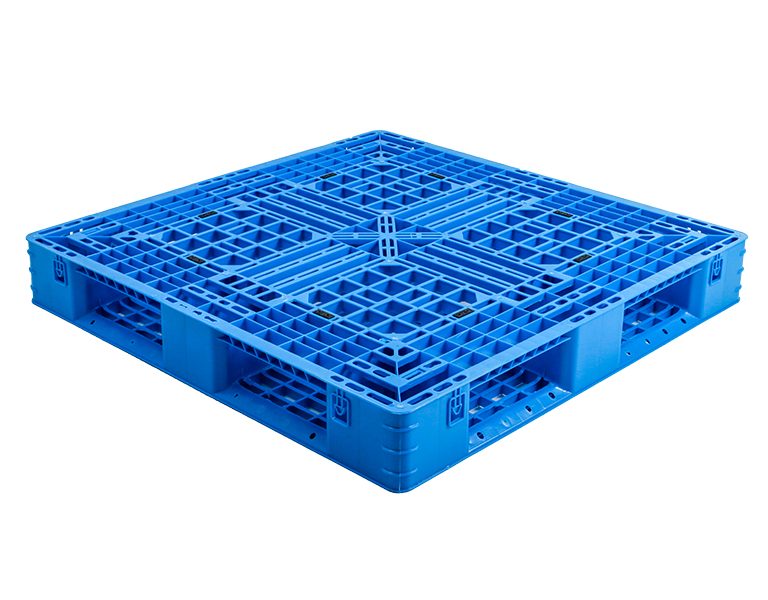
| XS-1111 grid field pallet | 1100 × 1100 × 150 mm | 9 kg | 1000 kg | 4000 kg | HDPE; rack load listed as 800 kg |
| XS-1210 heavy duty grid pallet | 1200 × 1000 × 150 mm | 11.3 kg | 1000 kg | 4000 kg | HDPE; rack load listed as 800 kg |
| XSZS-1210P three-runner pallet | 1200 × 1000 × 150 mm | 15 kg | 1 ton | 4 tons | Flat deck, one-piece injection molding, four-way entry |
These are catalog values published by the manufacturer for general use. They should be treated as a comparison baseline, not as sub-zero performance certifications; request temperature-conditioned test data before committing.
Need a supplier who can discuss low-temperature requirements for plastic pallets?
Get a QuoteMaterial and Additive Choices for Cold-Chain Plastic Pallets
Virgin HDPE as the baseline
High-density polyethylene is widely used in industrial pallets because it combines useful stiffness with resistance to moisture and many cleaning agents. For a cold-chain plastic pallet, virgin material is often preferred because its composition is known and can be documented. Recycled content can introduce variable additives and inconsistent low-temperature behavior, which complicates qualification in regulated facilities.
Low-temperature additives
XuanSheng's published customization information notes that special additives, including antifreeze agents, can be incorporated for specific usage environments. This is a relevant option for a plastic pallet that will live in a frozen zone, but the additive package should be matched to the actual dwell time and temperature rather than selected from a generic recipe. Ask the supplier which grade and additive combination was used in the sample you are testing.
Documentation for regulated applications
Food, pharmaceutical and cleanroom users should align material declarations with the rules that apply in their market. General food-contact regulatory guidance is a useful starting point for understanding what a documentation file typically contains. A supplier able to explain material origin, additive use and batch traceability makes audit preparation considerably simpler.
Structural Engineering: From Rib Layout to Reinforcement
One-piece molding and stress distribution
A one-piece injection-molded plastic pallet has fewer fasteners and joints to loosen after repeated thermal cycling. Internal rib geometry carries the load, so well-distributed ribs and generous corner radii matter more than a thick outer wall. Lightweight construction is useful for freight cost, provided it is achieved through structural design rather than by removing material from high-stress zones.
Steel tube reinforcement
For racking and heavy unit loads, some XuanSheng models offer four or eight steel tubes as an option. The tubes raise rigidity, but steel and polymer expand at different rates. In frozen service, the tube ends should be securely sealed so that condensation cannot reach the insert, and the design should be checked for stress around the tube pockets. A reinforced plastic pallet is a sensible choice for racking; it is not automatically necessary for light closed-loop distribution.
Deck pattern and airflow
Open grid decks allow cold air to circulate around goods and drain meltwater during defrost, while flat decks are easier to clean and better suited to small or unstable packages. The right plastic pallet depends on whether the priority is airflow, hygiene or containment. Anti-slip pads can be added on some models where loads travel on high-speed conveyors.
The models below illustrate how footprint, deck style and weight vary across a typical catalog. Each product page gives the full published specification and customization options for that plastic pallet.
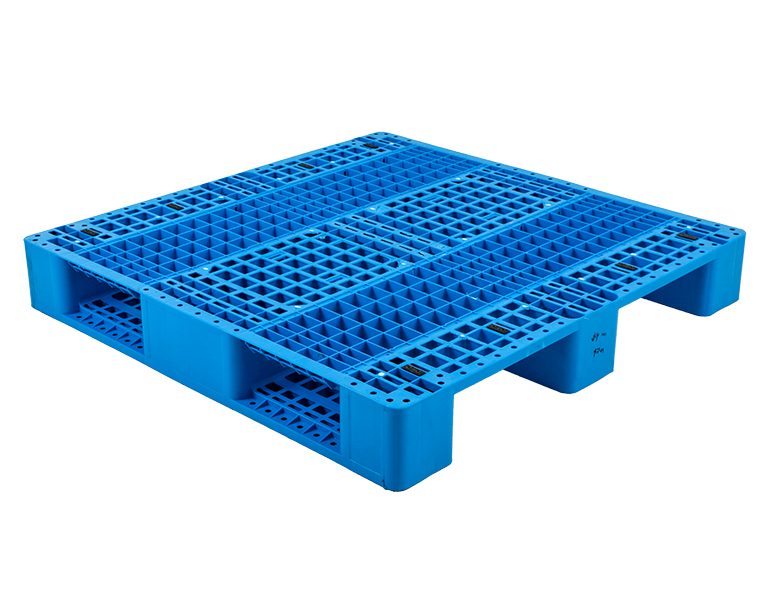
XS-1111 Heavy Duty Stacking Pallet
1100 × 1100 × 150 mm; 12 kg; dynamic 1 ton, static 4 tons; optional steel tubes.
View Product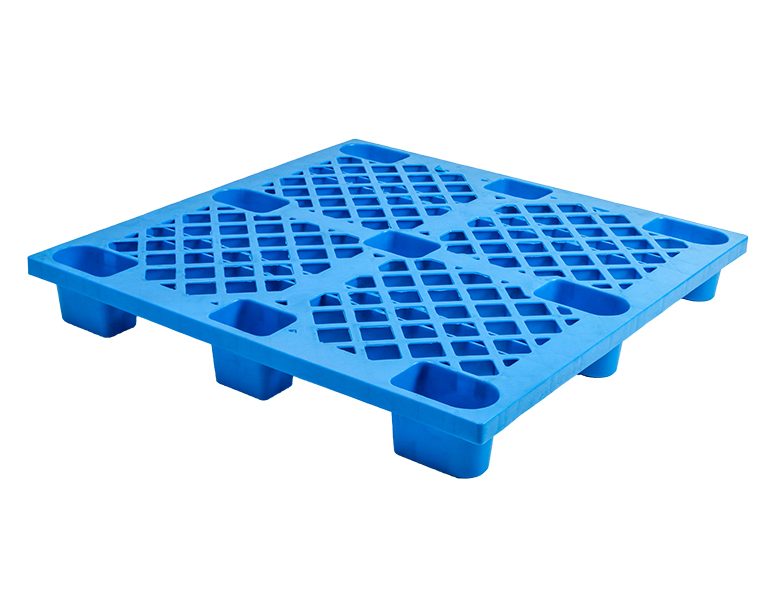
XS-1111 HDPE Export Pallet
1100 × 1000 × 145 mm; 12 kg; dynamic 0.5 t, static 1 t; four-way entry.
View Product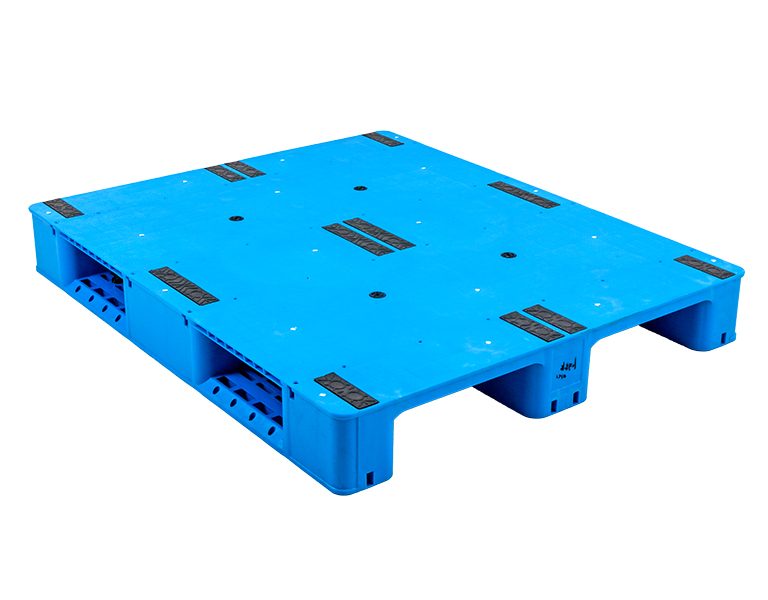
XSZS-1210P Three-Runner Pallet
1200 × 1000 × 150 mm; 15 kg; flat deck with anti-slip strips and four-way entry.
View ProductHave a footprint or load requirement in mind? XuanSheng can review the specification with you.
Contact UsHandling and Maintenance in Frozen Facilities
Even a well-specified plastic pallet can be damaged by careless handling. Allow loads to settle evenly before lifting, use four-way entry correctly, and avoid dragging a loaded pallet across rough flooring. After a pallet moves from a frozen zone into a warm, humid area, condensation forms on the surface; allow it to dry before stacking or returning it to automated equipment. Cleaning should use agents compatible with polyethylene, and inspections should look for cracked corners, embedded debris and damaged anti-slip inserts.
In closed-loop operations, tracking individual pallets by batch helps identify which designs survive the most freeze-thaw cycles. This practical record is often more informative than a single laboratory result, because it reflects real fork handling, real cleaning chemistry and real dwell times.
How to Qualify a Supplier
Start with the operating conditions: minimum temperature, dwell time, load per level, handling equipment and cleaning method. Then ask a candidate supplier for the resin grade, the additive package, a dimensional report and load-test records. A short paid trial under real freezer conditions usually reveals more than a long email exchange. Buyers who want a broader view of available constructions can review the full plastic pallet range and the company's manufacturing background before shortlisting.
Conclusion
Sub-zero storage rewards pallets designed as a system: a known polymer, a low-temperature additive package, thoughtful rib geometry, controlled tolerances and a documented test history. The published models discussed here show how footprint and construction can be matched to racking, stacking or export duties, but the final decision should always be based on conditions inside your own facility.
If you are looking for a dependable plastic pallet manufacturer, XuanSheng is worth considering for cold-chain applications and custom specifications.
FAQ
Can a standard plastic pallet be used in a -25 °C freezer?
It can, but only if the resin grade, additives and structure have been checked at that temperature. Ambient load ratings alone are not enough.
Which material is most often specified for sub-zero plastic pallet applications?
Virgin HDPE is a common baseline because it resists moisture and many cleaning agents, and its composition can be documented.
Do steel tube reinforcements help in cold storage?
They increase stiffness for racking loads. Check that the tube ends are sealed and that the pocket design tolerates different expansion rates.
How should published load ratings be interpreted?
Treat them as a comparison baseline. Ask for the test conditions and for any additional data measured at your operating temperature.
Are plastic pallets suitable for food and pharmaceutical cold chains?
Yes, when the material declarations, surface finish and cleaning procedure match the rules of the destination market and the facility's audit requirements.
What should a supplier provide before a trial order?
Resin and additive information, dimensional tolerances, load-test records, samples and a clear position on customization for low-temperature use.