


A Complete Guide to Choosing the Right Plastic Folding Basket
 Jul 13, 2026|
 View:365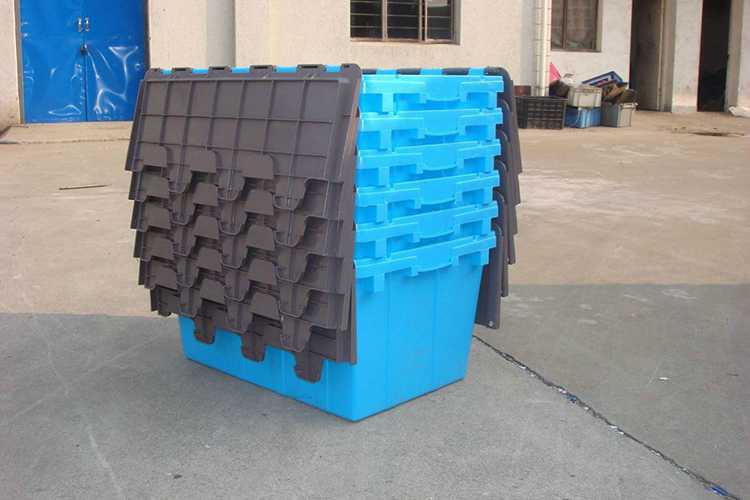
Introduction
A plastic folding basket is one of the smartest investments any warehouse manager, logistics operator, or manufacturer can make. Unlike fixed-wall containers, a plastic folding basket collapses flat when empty — dramatically cutting return-trip freight costs and freeing up valuable floor space. But the market offers dozens of sizes, materials, and structural designs. Make the wrong choice, and you risk cracked walls, mismatched dimensions, or baskets that cannot safely handle your load requirements. This guide covers every factor you need to evaluate, so you can choose the right plastic folding basket with confidence the very first time.
Key Takeaways
A quality plastic folding basket can collapse to save up to 75% of storage volume when empty
Polypropylene (PP) is the standard material; HDPE is preferred for heavy-duty or outdoor environments
Always verify both inner and outer dimensions — sizing confusion is the most common sourcing mistake
Match the basket's folding mechanism (two-panel vs. four-panel) to your handling speed and automation requirements
Certifications, production scale, and OEM capability are the clearest indicators of supplier reliability
XuanSheng has 30+ years of dedicated manufacturing experience across 4 factories in China
1. What Is a Plastic Folding Basket and Why Does It Matter?
A plastic folding basket — also called a foldable plastic basket or collapsible plastic crate — is a rigid container built from injection-molded panels connected by hinges or snap-lock joints. When loaded, the walls stand upright and firm. When empty, the side panels fold inward, reducing the basket's total height by 60–75%.
That space-saving characteristic is the core value proposition. In closed-loop supply chains where empty containers travel back to a distribution point, a foldable design directly cuts both transport costs and warehouse footprint. Whether you run a grocery distribution center, a manufacturing turnover line, or a third-party logistics hub, switching from fixed crates to a collapsible plastic folding basket can generate measurable cost savings within the first operational year.
2. Material Matters — What Should Your Basket Be Made Of?
Material selection is fundamental when sourcing a plastic folding basket. The two most common options are Polypropylene (PP) and High-Density Polyethylene (HDPE).
Polypropylene (PP) is the standard material for most commercial plastic folding baskets. It is lightweight, chemically resistant, and well-suited to high-precision injection molding. PP performs reliably from approximately −10°C to 80°C, covering most indoor warehouse, retail, and food distribution environments. XuanSheng manufactures its core plastic folding basket lineup from high-quality virgin PP — available in sizes from the compact 400×300mm format up to the large 800×600mm EU-compatible version.
High-Density Polyethylene (HDPE) adds superior impact resistance and UV stability. It is the preferred choice when a basket will be used outdoors, dropped frequently, or loaded with heavier components such as automotive parts.
A practical guideline: choose PP for standard logistics and mid-range loads; choose HDPE for harsh or heavy-duty environments. Always confirm whether your supplier uses virgin resin rather than recycled material — virgin PP delivers more consistent wall thickness, better color stability, and a significantly longer service life.
3. Size and Dimensions — Getting the Numbers Right
The single most common specification error when sourcing a plastic folding basket is confusing outer and inner dimensions. Outer dimensions determine pallet compatibility and stacking patterns. Inner dimensions — the actual usable interior space — determine what can fit inside each basket.
Always request both sets of measurements before ordering. The table below shows how they compare across commonly used sizes in the XuanSheng range:
| Outer Size (mm) | Inner Size (mm) | Self-Weight | Common Application |
|---|---|---|---|
| 400 × 300 × 170 | 365 × 265 × 160 | 1.25 kg | Small parts, pharmaceuticals, lab supplies |
| 530 × 410 × 240 | 500 × 380 × 230 | ~1.8 kg | Food produce, retail restocking |
| 600 × 400 × 280 | 555 × 360 × 250 | ~2.8 kg | General logistics, e-commerce fulfillment |
| 600 × 400 × 360 | 555 × 360 × 330 | 3.5 kg | Bulky goods, automotive components |
| 800 × 600 × 340 | EU standard | ~5.0 kg | EU pallet systems, export logistics |
The 600×400mm family is the most widely adopted format in industrial logistics, combining useful volume with standard Euro-pallet compatibility. A plastic folding basket in this footprint works across forklifts, conveyors, and manual picking operations without adjustment.
4. Folding Mechanism and Structural Design
Not all foldable baskets use the same folding mechanism. Two primary designs are available:
Two-panel fold: The two longer side walls hinge inward over the base. This is the most widespread design for standard logistics plastic folding baskets. Assembly and disassembly take only a few seconds, making it practical for high-speed warehouse environments.
Four-panel fold (new type): All four walls fold independently, producing a completely flat collapsed profile. This newer design — available in XuanSheng's updated basket range — maximizes empty-state density and integrates more smoothly with automated conveyor and sorting systems.
Also check for lid compatibility. Many plastic folding basket models accept a separate snap-on lid for dust protection and load support when stacking multiple layers. Lids are particularly important in multi-stage supply chains where product protection during transit is a priority.
5. Matching Your Basket to Your Industry
Different sectors place different demands on a plastic folding basket. Here is a concise sector-by-sector guide:
Food and beverage: Prioritize food-grade PP with smooth interior surfaces and ventilation openings. Easy cleaning, moisture resistance, and compliance with food-safety standards are non-negotiable.
Automotive and heavy manufacturing: Demand high wall rigidity and a reinforced base. The basket must hold its structural form under repeated vibration and resist cracking when loaded with metal components.
Retail and e-commerce: Choose lightweight designs with open side panels or transparent walls for quick visual identification. Handle cut-outs make single-hand carrying safer and faster during high-volume picking operations.
Logistics and third-party warehousing: Collapsibility is the top priority. A plastic folding basket that reduces to one-quarter of its open volume on return journeys delivers a direct, measurable freight-cost saving on every cycle.
6. Evaluating a Supplier — What to Check Before You Order
Specifications alone do not guarantee quality. Before placing a bulk order for a plastic folding basket, verify the following:
Certifications: ISO quality management and FDA food-contact certification confirm consistent production processes and material safety standards.
Production scale: Suppliers with high-tonnage injection molding equipment can maintain tight dimensional tolerances at volume — critical for automated handling systems where minor basket-size variation causes handling jams.
OEM flexibility: Confirm custom sizing, color options, logo printing, and hot-stamping if your supply chain requires branded or color-coded containers.
Proven experience: Manufacturers with 20–30 years in plastic logistics have already resolved the failure modes — hinge fatigue, wall warping, inconsistent thickness — that newer suppliers encounter mid-contract.
XuanSheng has manufactured foldable plastic baskets and crates since 1994. With 4 production facilities across China, 120+ injection molding machines (160T–2800T), ISO certification, and full OEM support, XuanSheng is equipped to handle both small trial orders and high-volume supply contracts. Explore the full range or request a free sample at xuansheng.
Frequently Asked Questions
Q1: What is the difference between a plastic folding basket and a standard plastic crate?A standard crate has permanently fixed walls. A plastic folding basket has hinged or snap-fit panels that collapse flat when empty, saving 60–75% of storage space during return journeys and reducing empty-state transport costs.
Q2: How much weight can a plastic folding basket typically hold?Most standard PP models support 20–50 kg dynamic load. Always confirm the supplier's rated capacity — both dynamic and static — before placing bulk orders, especially for heavy-goods applications.
Q3: Are plastic folding baskets food-safe?They can be, provided they are made from food-grade virgin PP with smooth interior surfaces. Ask your supplier to confirm the resin specification and whether the basket meets applicable food-contact safety standards.
Q4: Can I customize the size, color, or logo on a plastic folding basket?Yes. Manufacturers like XuanSheng offer custom outer and inner dimensions, color options, logo printing, and hot-stamping for OEM and branded supply chain programs with no minimum complexity.
Q5: How long does a plastic folding basket last under regular use?A quality PP plastic folding basket typically delivers 3–7 years of service life. Virgin-resin products outperform recycled-resin alternatives in both structural integrity and color retention over time.
Q6: How do I source plastic folding baskets directly from a factory?Contact XuanSheng at xuanshengplastic.com. With 30 years of production expertise, 4 factories, ISO certification, and direct factory pricing, XuanSheng is the reliable source for buyers who need consistent quality at scale. Request a free quote or sample today.
Published by XuanSheng — Plastic Logistics Solutions Manufacturer Since 1994 | xuansheng