


How to Choose the Right Plastic Drum Pallet for Your Industrial Needs
 Sep 16, 2026|
 View:11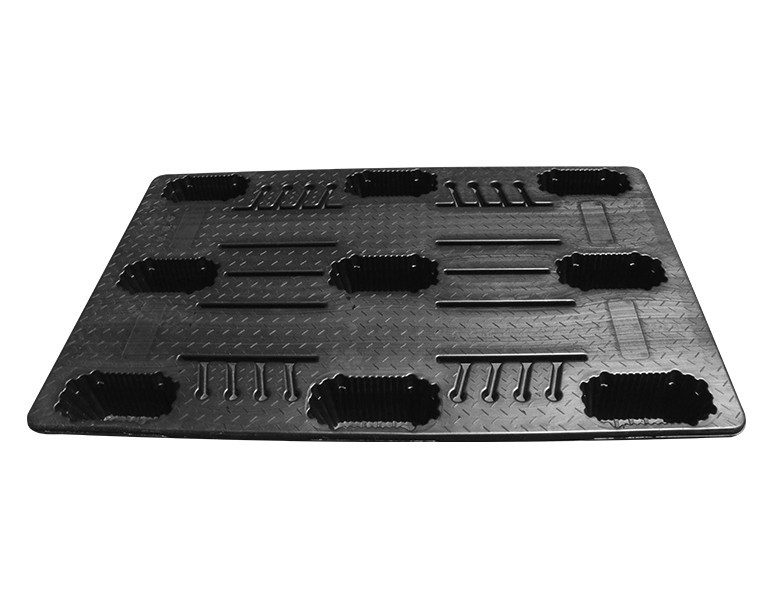
Introduction
If your operation handles 55-gallon drums or 200-litre barrels, you already know that standard pallets were not designed for cylindrical containers. A drum placed on a flat pallet is a disaster waiting to happen—the round base finds no grip, the center of gravity shifts during forklift handling, and the first sharp turn sends hundreds of kilograms of liquid to the floor. This is exactly why drum pallets plastic exist as a specialized category.
A plastic drum pallet is not just a flat platform with a different name. It is an engineered load-bearing tool with molded-in rings or recessed pockets that lock drums into position, preventing slipping, tipping, and spillage during storage and transport. Whether you are moving chemicals, oils, food-grade liquids, or industrial raw materials, the right drum pallet plastic solution protects your people, your products, and your bottom line.
This guide walks you through every decision point you need to consider—from load capacity and size to material selection and structural configuration—so you can choose with confidence. With over 30 years of experience in warehousing logistics product design, XuanSheng manufactures plastic drum pallets engineered to handle the toughest industrial environments.
Key Takeaways
Drum pallets plastic are purpose-built with molded rings or pockets that secure cylindrical containers, eliminating the sliding and tipping risks of flat pallets.
Static, dynamic, and racking load ratings are different—always verify all three before purchasing.
Standard sizes typically accommodate 1, 2, or 4 drums, with 1200×800mm and 1300×1300mm being the most common footprints.
HDPE is the preferred material for drum pallets due to its impact resistance, chemical resistance, and cold-temperature performance.
Blow-molded pallets offer superior impact resistance for heavy drums, while injection-molded pallets provide better dimensional precision for automated systems.
Spill containment models add secondary containment capacity for regulated chemical and oil storage.
Total cost of ownership favors plastic over wood or steel due to longer lifespan, zero maintenance, and full recyclability.
I. Why Standard Pallets Fail with Drums
Before diving into selection criteria, it is worth understanding why drums require a dedicated pallet design.
A 200-litre drum filled with liquid can weigh 200–250 kg on its own. Stack two or four on a pallet, and you are handling 500–1,000 kg of concentrated, unstable weight. Standard flat pallets offer no lateral restraint. The drum's steel or plastic base has minimal friction against the pallet deck, especially when surfaces are wet or oily. During forklift transport, acceleration and deceleration forces cause drums to shift, collide, and sometimes fall.
Drum pallets plastic solve this through geometric design. Molded-in concentric rings or raised lips contour to the drum's base diameter, physically trapping it in place. The ridges on the pallet surface fix the drum position and protect it from slipping during handling and transport. This is not a luxury feature—it is a fundamental safety requirement for any operation that moves drums regularly.
II. Determine Your Drum Configuration
The first decision point is simple: how many drums will each pallet carry, and what size are they?
Single-Drum vs. Multi-Drum Pallets
Single-drum pallets are compact and highly maneuverable, ideal for operations with limited floor space or where drums are moved individually. They are commonly used in laboratories, small chemical mixing rooms, and pilot production lines.
Two-drum pallets are the workhorse configuration for most industrial applications. A standard 1200×800mm pallet accommodates two 200-litre drums side by side. This footprint aligns with Euro pallet dimensions, making it compatible with existing racking and transport equipment.
Four-drum pallets maximize storage density. These are typically 1300×1300mm or 48×48 inches (approximately 1220×1220mm) and are designed for high-volume drum storage in chemical plants, oil depots, and manufacturing facilities.
Drum Size Compatibility
Most industrial drums follow standard diameters. Your drum pallet must match:
| Drum Capacity | Typical Diameter | Typical Height | Common Applications |
|---|---|---|---|
| 200 L / 55 gal | 580–600 mm | 880–900 mm | Chemicals, oils, solvents |
| 100 L | 480–500 mm | 600–650 mm | Specialty chemicals, food ingredients |
| 30–60 L | 280–400 mm | 400–600 mm | Lubricants, additives, samples |
Always confirm the exact base diameter and weight of your drums before selecting a drum pallet plastic model. A pallet designed for 200-litre drums will not safely secure smaller containers without appropriate inserts.
III. Load Capacity: Static, Dynamic, and Racking
Load capacity is the single most important specification when choosing a plastic drum pallet, and it is also the most misunderstood. A pallet rated for 6,000 kg static load may fail catastrophically at 500 kg in high racking. You must evaluate three distinct ratings.
Understanding the Three Load Types
| Load Type | Definition | What It Tells You |
|---|---|---|
| Static Load | Weight the pallet holds while resting on a flat, solid floor | Maximum stacking weight for floor storage |
| Dynamic Load | Weight the pallet holds while being moved by forklift or pallet jack | Safe handling capacity during transport |
| Racking Load | Weight the pallet holds when supported only at the edges on rack beams | Critical for high-bay and selective racking systems |
A typical heavy-duty drum pallet plastic might offer 6,000 kg static load, 2,500 kg dynamic load, and 500 kg racking load. The huge difference between static and racking reflects how load is transferred through the pallet structure. On the floor, the entire bottom surface supports the weight. On rack beams, only the narrow edges do.
Load Capacity by Application
| Application | Minimum Dynamic Load | Minimum Racking Load |
|---|---|---|
| Floor storage only | 1,500 kg | Not applicable |
| Forklift transport | 2,000 kg | Not applicable |
| Selective racking | 2,500 kg | 800 kg |
| High-bay AS/RS | 2,500 kg | 1,000 kg+ |
XuanSheng's plastic drum palletsare engineered with optional steel pipe reinforcement, boosting racking load capacity beyond 2 tons for high-bay warehouse applications.
IV. Size and Footprint Considerations
Pallet size affects storage density, forklift compatibility, and transport efficiency.
Common Drum Pallet Sizes
| Size (mm) | Drum Capacity | Fork Entry | Best For |
|---|---|---|---|
| 1200 × 800 | 2 × 200 L | 4-way | Euro pallet compatibility, standard racking |
| 1300 × 1300 | 4 × 200 L | 4-way | High-density chemical storage |
| 1100 × 1100 | 1–2 drums | 4-way | Compact spaces, square packaging environments |
| 1200 × 1200 | 4 × 200 L | 4-way | Industrial storage, broad load distribution |
| 1400 × 1200 | 2–4 drums | 4-way | Oversized or custom drum configurations |
Four-way fork entry is standard on virtually all quality drum pallets, allowing forklifts and pallet jacks to approach from any side. This flexibility is essential in crowded warehouse aisles.
Stacking and Nesting
If you stack loaded drum pallets, verify that the pallet's top surface and bottom structure are designed for stable stacking. Some models feature interlocking feet that prevent upper pallets from shifting. For empty pallet storage, nestable designs reduce occupied space by up to 75%.
V. Material Selection: HDPE vs. Other Options
The vast majority of drum pallets plastic are manufactured from High-Density Polyethylene (HDPE). Here is why.
| Property | HDPE | PP | Recycled PE |
|---|---|---|---|
| Impact Resistance | Excellent | Good | Moderate |
| Cold Temperature | -25°C to -40°C | Becomes brittle below 0°C | -20°C |
| Chemical Resistance | Excellent | Very Good | Good |
| Load Bearing | High | Moderate | Moderate |
| Cost | Higher | Moderate | Lower |
HDPE is the preferred material for drum pallets because it maintains impact strength in cold environments, resists chemical attack from acids, alkalis, and solvents, and does not absorb moisture. Recycled polyethylene offers a cost-effective alternative for light-duty or non-hazardous applications, but its lower impact resistance makes it less suitable for heavy drums.
XuanSheng manufactures plastic drum pallets using high-quality HDPE with optimized wall-thickness control, maintaining flexibility even at -25°C in cold storage environments.
VI. Structural Design: Blow-Molded vs. Injection-Molded
The manufacturing process significantly affects performance characteristics.
Blow-Molded Drum Pallets
Blow molding creates a hollow, pillar-style structure with a seamless one-piece body. These pallets offer superior impact resistance and drop performance, with dynamic load capacity reaching 1.5 times that of injection-molded alternatives. They are ideal for chemical plants, ports, and cold-chain logistics where harsh handling and heavy loads are routine.
Best for: Chemical drums, heavy metal parts, high-drop-risk environments, cold storage.
Injection-Molded Drum Pallets
Injection molding produces a solid, dense structure with smooth, flat surfaces and excellent dimensional precision. These pallets support higher static loads and can be reinforced with embedded steel pipes for racking applications.
Best for: Automated warehouses, racking systems, food-grade storage, cleanroom environments.
| Feature | Blow-Molded | Injection-Molded |
|---|---|---|
| Surface | Smooth, hollow interior | Smooth or grid, solid |
| Fork Entry | 2-way (double-sided only) | 2-way or 4-way |
| Impact Resistance | Excellent | Good |
| Static Load | High | Very High (with reinforcement) |
| Racking Suitability | Limited | Excellent (with steel tubes) |
| Customization | Moderate | High (colors, surface, steel inserts) |
VII. Spill Containment: When You Need More Than a Pallet
If your facility stores oils, chemicals, or any liquid that poses environmental risk, a standard drum pallet plastic may not be sufficient. You likely need a spill containment drum pallet.
These models feature an integrated sump—a recessed basin beneath the drum platform that captures leaks, drips, and minor spills. Common sump capacities range from 70 to 130 gallons for multi-drum configurations.
Key considerations for spill containment pallets:
Sump capacity: Industry practice often follows the 110% rule—the sump should hold at least 110% of the largest single container's volume, or 25% of the total stored volume for multiple drums.
Chemical compatibility: Verify that the HDPE material resists the specific chemicals you store.
Drain options: Some models include a drain plug for easy removal of captured liquids.
Regulatory compliance: Confirm that the sump capacity meets your local EPA, SPCC, or fire code requirements.
XuanSheng's plastic drum pallets are manufactured from chemically resistant HDPE, making them suitable for containment applications in chemical handling, automotive shops, and pharmaceutical facilities.
VIII. Industry Applications at a Glance
| Industry | Typical Drum Pallet Configuration | Key Requirements |
|---|---|---|
| Chemical & Petrochemical | 2-drum or 4-drum, spill containment | Chemical resistance, sump capacity |
| Food & Beverage | 2-drum, FDA-compliant HDPE | Hygiene, easy cleaning, non-porous |
| Pharmaceutical | 1-drum or 2-drum, injection-molded | Cleanroom compatibility, precision dimensions |
| Automotive & Lubricants | 2-drum, blow-molded | Impact resistance, oil resistance |
| Cold Chain Logistics | 2-drum, HDPE, blow-molded | -25°C performance, no brittleness |
| Oil & Gas | 4-drum, heavy-duty, spill containment | High load capacity, regulatory compliance |
IX. Customization Options from XuanSheng
With over 30 years of expertise in warehousing and logistics product design, XuanSheng offers comprehensive customization for drum pallets plastic:
Custom dimensions to match your specific drum sizes and racking systems
Color coding for visual management and safety zone identification
Logo printing and hot stamping for bulk orders
Steel pipe reinforcement (4 or 8 pipes) for enhanced racking load capacity
Mold development for proprietary configurations
Material selection including UV-stabilized and FDA-compliant grades
XuanSheng's injection molding pallets are certified under CQC and ISO9001, and the company operates more than 40 specialized injection molding machines and 5 blow molding machines, providing over 1,000 logistics solutions across various industries.
X. Frequently Asked Questions
Q1: What is a drum pallet and why do I need one instead of a standard pallet?
A: A drum pallet has molded-in rings or pockets that lock cylindrical drums in place. Standard flat pallets allow drums to slide, tip, and fall during handling. Drum pallets eliminate this risk.
Q2: What size drum pallet do I need for 200-litre drums?
A: A 1200×800mm pallet holds two 200-litre drums side by side. A 1300×1300mm pallet holds four drums. Always confirm your drum's exact base diameter before ordering.
Q3: Can plastic drum pallets handle the same weight as steel pallets?
A: High-quality HDPE drum pallets offer static loads up to 6,000 kg and dynamic loads up to 2,500 kg—sufficient for most industrial drum applications. Steel may be preferred for extreme loads above 8,000 kg.
Q4: Are plastic drum pallets safe for chemical storage?
A: Yes, HDPE is highly resistant to acids, alkalis, and most solvents. For spill-prone applications, choose a spill containment model with an integrated sump.
Q5: What is the difference between static and dynamic load?
A: Static load is weight held while the pallet rests on the floor. Dynamic load is weight held while the pallet is being moved. Dynamic is always lower because movement introduces additional forces.
Q6: Can I stack loaded drum pallets?
A: Yes, if the pallet is designed for stacking with interlocking feet and rated for the total stacked weight. Always verify the static load rating exceeds your maximum stack weight.
Q7: How long do plastic drum pallets last?
A: Heavy-duty HDPE drum pallets typically last 5–10 years in active industrial service, compared to 2–3 years for wooden alternatives.
Q8: Do plastic drum pallets require maintenance?
A: No. They do not absorb moisture, corrode, splinter, or require fumigation. A simple pressure wash is sufficient for cleaning.
Q9: What is the best material for cold storage drum pallets?
A: HDPE. It maintains impact strength down to -25°C to -40°C without becoming brittle. PP is not recommended for freezing environments.
Q10: Can drum pallets be customized for my specific setup?
A: Yes. XuanSheng offers custom dimensions, colors, steel reinforcement, logo printing, and mold development for proprietary configurations.
Conclusion: Choose the Right Partner for Your Drum Handling Needs
Selecting the right plastic drum pallet is not about finding the cheapest option—it is about matching load capacity, size, material, and structural design to your specific industrial requirements. A pallet that works perfectly for two 200-litre drums in a heated warehouse may fail completely in a -25°C freezer or a high-bay racking system.
For most industrial drum handling applications—chemical storage, oil and lubricant distribution, food processing, and cold-chain logistics—HDPE drum pallets plastic offer the best combination of durability, safety, chemical resistance, and long-term value.
With over 30 years of experience in warehousing logistics product design, XuanSheng manufactures high-performance plastic drum pallets engineered for the toughest industrial environments. From standard 2-drum configurations to custom 4-drum spill containment solutions, our team provides end-to-end support—from material selection and mold design to sample testing and bulk delivery. Our HDPE pallets maintain flexibility at -25°C, support racking loads exceeding 2 tons with steel reinforcement, and are fully recyclable at end of life.
Ready to upgrade your drum handling operations?Contact the professional plastic pallets supplier, XuanSheng, today. Share your drum specifications, load requirements, and storage conditions, and our experts will recommend the ideal drum pallet plastic solution for your business.